Thinking through solidarity organizing, with an eye to how we can better live the change, as well as how we often slip in to colonial patterns when working together across distance and difference.
warning, this entry may leave you with disturbing mental images!
So the odd alternative security advice I got for a sexual attack, and it would seem this is only useful for women, is to pee on yourself - and TELL your attacker that you just did. The idea is to gross them out.
Thankfully I've never had to try this, so I can't say if it works, but these are the sorts of strategies women share with each other, and the sorts of things women accompaniers have to think about.
The Nonviolent Peaceforce just
signed an agreement with the government of Burma (Myanmar) to support
initiatives of the official Myanmar Peace Center. In their announcement they make no mention of the long history of military rule in
Burma, or their take on the elections that many question. Presumably
they see the elections as legitimate, even though they were run by the
military and the military won 80% of the vote. I certainly support the
moves towards democracy in Burma, but working directly for a government
so closely tied to the military seems an odd move to me. But then the
Nonviolent Peaceforce has been very interested in working officially
with governments (they serve in an official capacity in Mindanao).
The NP calls what they do 'civilian peacekeeping' rather than
protective accompaniment, and accompaniment seems to be only one small
piece of what they do for peace.
The video above is part of the "not in her shoes" campaign by Planned Parenthood. The video ends by calling for conversations based on "mutual respect and empathy". But I think many viewers will think that the slogan "not in her shoes" is an argument that you can NOT empathize - that there is no way you can understand what a woman who chooses an abortion is going through. I think what they are trying to go for instead in the video is that you should not make decisions for her, but because the phrase 'in her shoes' has been so closely tied to empathy, it causes confusion and I was surprised when they then ended with a call for empathy.
I've blogged repeatedly before about how this turn of phrase 'in her shoes' is problematic. To play with the metaphor, if you are in someone else's shoes, there is no room for them - you put your reality on top of theirs, you step on them. That is to say, you run the risk of thinking you really know what it's like to be them, of engaging in appropriative empathy. I agree with planned parenthood, you are not in her shoes. But rather than emphasize that, I continue to think it's more powerful to imagine walking alongside her, in your own shoes - in this case, working together for safe and legal access to all reproductive health services for all.
Thanks to Craig Jones for pointing me to this video, which is one of those attempts to help you imagine yourself in the shoes of a war victim. I like it more than most of these because the juxtaposition of the words and the images are such that you are always reminded that you can´t entirely know what it´s like. The video is also unusual in that after trying to get you identify with the victim, it then turns to listening to the humanity of the victimizer.
I love this animated lecture series, but some of the arguments by Roman Krznaric in this talk on empathy bug me. Yes, I do think that some sort of 'feeling-with' plays an important role in building connections across distance and difference and motivating people to work for social change. But I don't think the answer is to 'feel as', and much less to try to 'be the other'. Pretending to be homeless seems disrespectful to me, and I am disturbed that here George Orwell is yet again simplistically held up for doing this. There is certainly power in living with the poor, living simply, and in other ways 'being with' those who are different than you, in ways that help you understand their reality, feel-with, and motivate you to walk with and struggle with them. But pretending to be someone you are not is not only disrespectful of those you would walk with, it diminishes the power of your solidarity.
In the fantastic
article “Sympathy and Solidarity: On a Tightrope with
Scheler” (1997) Sandra Bartky draws of Max Scheler’s work on sympathy (from
1913).He argues that there are
four forms of fellow-feeling, or feeling-with.We tend to call these empathy today, though she argues they
are sympathy.Those four forms are:
1)true fellow-feeling: shared
feeling due to the same cause like the death of a child (though I would argue
that even the same cause can lead to different feelings)
2)emotional infection: shared
emotion through contagion, like mass hysteria
3)emotional identification:
‘psychic contagion’ where you are lost in the other and imagine you can see and
feel with them
4)“genuine fellow-feeling”: where
you react to the other’s feeling, but are aware of the distance between hers
and yours.She feels, and you feel
with her.
As you might imagine, Bartky and Scheler argue that it is the
fourth that is most useful.I
would call this walking with her, rather than in her shoes.Bartky argues that this is not a
comparison of my feelings to hers, or a projection of my experience onto hers,
and not a matter of imagining what if this happened to me. None of these allow
us to really appreciate her life, to reach out, to go beyond our own
experience.Bartky does see
imagination as important, but without ourselves as the star of the show.You don’t have to imagine as it would
happen to you, you can imagine it as happening to her.You don’t have to have felt it, or
something like it, before yourself to imagine it (though I think it is of
course easier to imagine those emotions, a matter she does not address).She does argue that it is easier to
imagine when we get more details, not simply about the scene, but also the
feelings of the teller.I
certainly agree.
Bartky, S. L. “Sympathy and Solidarity: On a Tightrope with Scheler.” In Feminists Rethink the Self, edited by Diana Tietjens Meyers, 177–96. Westview Press, 1997.
I'm still settling in to Bogotá, so forgive me for reposting again. Over on everyday feminism, Jamie Utt, wrote an article on how to do this. His key points are excerpted below:
1. Start By Appealing To the Ways In Which They Don’t Have Privilege
One of the fastest ways to disarm a person’s defensiveness about
their own privilege is to take some time to listen to the ways in which
they legitimately do not have privilege and validate those frustrations.
I once attended a workshop with Peggy McIntosh, the original author of “Unpacking the Invisible Knapsack.”
The goal of the workshop was to give people tools for leading
workshops of their own on privilege and oppression that get past the
defensiveness.
One of her suggestions was to have people divide a paper in half.
Have every person start on the left side of the paper and write down all
of the ways in which they do not have
identity privilege. They can include everything from being left handed
and having to drag your hand through the ink to being a woman and having
to deal with the gender wage gap.
Then folks would write on the opposite side all of the ways in which
their identity does afford them privilege that they did not earn.
From there, folks pair up and do a listening exercise where they
listen intently to the other person talk about both sides of their list.
Doing so allows people to air their frustrations at being denied
privilege while also acknowledging that they do, indeed, have privilege.
From that place, it is a lot easier to help folks understand the
power of privilege in creating a system of oppression and how
eliminating that system is liberatory and transformative for everyone.
Now, to do this, you don’t need to turn it into a workshop. Just try
asking the other person to talk about the ways in which they don’t have
identity privilege and validate those hurts and frustrations.
Simply listening can go a long way! Plus, it’s a starting point for
helping them build empathy for those who do not have their same
privileges.
2. Stress That Privilege Is Relative
Each person experiences their privilege and lack thereof within the
context of their own community and the people they interact with at the
time.
Does that mean that all privileges are equal? No. I’m right handed
and in turn, don’t have to drag my palm through the ink when I write.
That’s a privilege I have by the nature of my birth.
That is not to say, though, that my right-handed privilege bears the
same weight or social responsibility as the privilege that my skin
color, gender, wealth, or sexual orientation afford me.
The point is that our identities are complex and intersectional.
Some folks get defensive about discussing privilege because they fear
such a conversation will not address the real and powerful ways in
which they do not have privilege. So they deflect by only talking about those things.
Just because we benefit from one form of privilege doesn’t mean that we benefit from all forms of privilege.
When we realize that, we can work together with people who share our privileges and those who don’t to build something better!
3. A System of Privilege and Oppression Hurts Us All
What we most need to stress in conversations about privilege is that
this system doesn’t just hurt the people who cannot boast one form of
identity privilege or another.
It hurts everyone. Until we understand that, we’re not
getting anywhere because the only people of privilege who will ever act
to end the system are the ones acting strictly from paternalistic guilt.
Take white privilege, for instance. White privilege is, essentially,
a social construction whereby wealthy Europeans wanted to make sure
that they could consolidate their wealth by pitting poor people from
Europe against poor Africans and Indigenous people.
White folks were made to feel better about themselves and were given
paltry privileges over people of color in order to divide the white
proletariat.
All that meant, though, is that the white folks got to be the lords
over people of color while the wealthy whites still had their boots on
the necks of poor whites!
These privileges don’t help us as white people nearly as much as they hurt us!
Similarly, male privilege may benefit men tremendously in certain
ways. But in others, it restricts us into a tiny box of masculinity. I
don’t know about you, but I am sick of trying to fit into my gendered
box, the “Act Like a Man” box.
I want my gender expression to be free and independent of those aspects of masculinity that hurt men and
women – violence is acceptable for solving problems, boys don’t cry,
men are the lords of their household, men must know everything even when
they don’t, etc.
The privileges are marginal when we look at the system of justice that can be built on the other side of this struggle!
4. Privilege Does Not Have To Mean Guilt!
....
5. Offer Concrete Ways That They Can Undermine the System of Privilege and Oppression In Their Own Life
....
6. Make It a Conversation of Actions, Not Character
Canada’s state and corporate wealth is largely based on
subsidies gained from the theft of Indigenous lands and resources.
Conquest in Canada was designed to ensure forced displacement of
Indigenous peoples from their territories, the destruction of autonomy
and self-determination in Indigenous self-governance and the
assimilation of Indigenous peoples’ cultures and traditions. Given the
devastating cultural, spiritual, economic, linguistic and political
impacts of colonialism on Indigenous people in Canada, any serious
attempt by non-natives at allying with Indigenous struggles must entail
solidarity in the fight against colonization.
Non-natives must be able to position ourselves as active and
integral participants in a decolonization movement for political
liberation, social transformation, renewed cultural kinships and the
development of an economic system that serves rather than threatens our
collective life on this planet. Decolonization is as much a process as a
goal. It requires a profound recentring on Indigenous worldviews. Syed
Hussan, a Toronto-based activist, states: “Decolonization is a dramatic
reimagining of relationships with land, people and the state. Much of
this requires study. It requires conversation. It is a practice; it is
an unlearning.”
Indigenous solidarity on its own terms
A growing number of social movements are recognizing that Indigenous
self-determination must become the foundation for all our broader
social justice mobilizing. Indigenous peoples in Canada are the most
impacted by the pillage of lands, experience disproportionate poverty
and homelessness, are overrepresented in statistics of missing and
murdered women and are the primary targets of repressive policing and
prosecutions in the criminal injustice system. Rather than being treated
as a single issue within a laundry list of demands, Indigenous
self-determination is increasingly understood as intertwined with
struggles against racism, poverty, police violence, war and occupation,
violence against women and environmental justice.
Incorporating Indigenous self-determination into these movements
can, however, subordinate and compartmentalize Indigenous struggle
within the machinery of existing Leftist narratives. Anarchists point to
the antiauthoritarian tendencies within Indigenous communities,
environmentalists highlight the connection to land that Indigenous
communities have, anti-racists subsume Indigenous people into the
broader discourse about systemic oppression in Canada, and women’s
organizations point to the relentless violence inflicted on Indigenous
women in discussions about patriarchy.
We have to be cautious not to replicate the Canadian state’s
assimilationist model of liberal pluralism, forcing Indigenous
identities to fit within our existing groups and narratives. The
inherent right to traditional lands and to self-determination is
expressed collectively and should not be subsumed within the discourse
of individual or human rights. Furthermore, it is imperative to
understand that being Indigenous is not just an identity but a way of
life, which is intricately connected to Indigenous peoples’ relationship
to the land and all its inhabitants. Indigenous struggle cannot simply
be accommodated within other struggles; it demands solidarity on its own
terms.
The practice of solidarity
One of the basic principles of Indigenous solidarity organizing is
the notion of taking leadership. According to this principle,
non-natives must be accountable and responsive to the experiences,
voices, needs and political perspectives of Indigenous people
themselves. From an anti-oppression perspective, meaningful support for
Indigenous struggles cannot be directed by non-natives. Taking
leadership means being humble and honouring front-line voices of
resistance as well as offering tangible solidarity as needed and
requested. Specifically, this translates to taking initiative for
self-education about the specific histories of the lands we reside upon,
organizing support with the clear consent and guidance of an Indigenous
community or group, building long-term relationships of accountability
and never assuming or taking for granted the personal and political
trust that non-natives may earn from Indigenous peoples over time.
In offering support to a specific community in the defence of their
land, non-natives should organize with a mandate from the community and
an understanding of the parameters of the support being sought. Once
these guidelines are established, non-natives should be proactive in
offering logistical, fundraising and campaign support. Clear lines of
communication must always be maintained, and a commitment should be made
for long-term support. This means not just being present for blockades
or in moments of crisis, but developing an ongoing commitment to the
well-being of Indigenous peoples and communities.
Organizing in accordance with these principles is not always
straightforward. Respecting Indigenous leadership is not the same as
doing nothing while waiting around to be told what to do. “I am waiting
to be told exactly what to do” should not be an excuse for inaction, and
seeking guidance must be weighed against the possibility of further
burdening Indigenous people with questions. A willingness to decentre
oneself and to learn and act from a place of responsibility rather than
guilt are helpful in determining the line between being too
interventionist and being paralyzed.
Cultivating an ethic of responsibility within the Indigenous
solidarity movement begins with non-natives understanding ourselves as
beneficiaries of the illegal settlement of Indigenous peoples’ land and
unjust appropriation of Indigenous peoples’ resources and jurisdiction.
When faced with this truth, it is common for activists to get stuck in
their feelings of guilt, which I would argue is a state of
self-absorption that actually upholds privilege. While guilt is often a
sign of a much-needed shift in consciousness, in itself it does nothing
to motivate the responsibility necessary to actively dismantle
entrenched systems of oppression. In a movement-building round table,
long-time Montreal activist Jaggi Singh said: “The only way to escape
complicity with settlement is active opposition to it. That only happens
in the context of on-the-ground, day-to-day organizing, and creating
and cultivating the spaces where we can begin dialogues and discussions
as natives and non-natives.”
Sustained alliance building
Sustaining a multiplicity of meaningful and diverse relationships
with Indigenous peoples is critical in building a non-native movement
for Indigenous self-determination. “Solidarity is not the same as
support,” says feminist writer bell hooks. “To experience solidarity, we
must have a community of interests, shared beliefs and goals around
which to unite, to build Sisterhood. Support can be occasional. It can
be given and just as easily withdrawn. Solidarity requires sustained,
ongoing commitment.”
Who exactly one takes direction from while building networks of
ongoing solidarity can be complicated. As in any community, a diversity
of political opinions often exists within Indigenous communities. How do
we determine whose leadership to follow and which alliances to build? I
take leadership from and offer tangible support to grassroots
Indigenous peoples who are exercising traditional governance and customs
in the face of state control and bureaucratization, who are seeking
redress and reparations for acts of genocide and assimilation, such as
residential schools, who are opposing corporate development on their
lands. I support those who are pushing back against the oppressions of
hetero-patriarchy imposed by settler society, who are struggling against
poverty and systemic marginalization in urban areas, who are
criticizing unjust land claims and treaty processes and who are
affirming their own languages, customs, traditions, creative expression
and spiritual practices.
Alliances with Indigenous communities should be based on shared
values, principles and analysis. For example, during the anti-Olympics
campaign in 2010, activists chose not to align with the Four Host First
Nations, a pro-corporate body created in conjunction with the Vancouver
Olympics organizing committee. Instead, we took leadership from and
strengthened alliances with land defenders in the Secwepemc and
St’át’imc nations and Indigenous people being directly impacted by
homelessness and poverty in the Downtown Eastside. In general, however,
differences surrounding strategy within a community should be for
community members to discuss and resolve. We should be cautious of a
persistent dynamic where solidarity activists start to fixate on the
internal politics of an oppressed community. Allies should avoid trying
to intrude and interfere in struggles within and between communities,
which perpetuates the civilizing ideology of the white man’s burden and
violates the basic principles of self-determination.
Building intentional alliances should also avoid devolution into
tokenization. Non-natives often choose which Indigenous voices to
privilege by defaulting to Indigenous activists they determine to be
better known, easier-to-contact or “less hostile.” This selectivity
distorts the diversity present in Indigenous communities and can
exacerbate tensions and colonially imposed divisions between Indigenous
peoples. In opposing the colonialism of the state and settler society,
non-natives must recognize our own role in perpetuating colonialism
within our solidarity efforts. We can actively counter this by
theorizing about and discussing the nuanced issues of solidarity,
leadership, strategy and analysis – not in abstraction, but within our
real and informed and sustained relationships with Indigenous peoples.
Decolonizing relationships
While centring and honouring Indigenous voices and leadership, the
obligation for decolonization rests on all of us. In “Building a
‘Canadian’ Decolonization Movement: Fighting the Occupation at ‘Home,’”
Nora Burke says: “A decolonisation movement cannot be comprised solely
of solidarity and support for Indigenous peoples’ sovereignty and
self-determination. If we are in support of self-determination, we too
need to be self-determining. It is time to cut the state out of this
relationship, and to replace it with a new relationship, one which is
mutually negotiated, and premised on a core respect for autonomy and
freedom.”
Being responsible for decolonization can require us to locate
ourselves within the context of colonization in complicated ways, often
as simultaneously oppressed and complicit. This is true, for example,
for racialized migrants in Canada. Within the anticolonial migrant
justice movement of No One Is Illegal, we go beyond demanding
citizenship rights for racialized migrants as that would lend false
legitimacy to a settler state. We challenge the official state discourse
of multiculturalism that undermines the autonomy of Indigenous
communities by granting and mediating rights through the imposed
structures of the state and that seeks to assimilate diversities into a
singular Canadian identity. Andrea Smith, Indigenous feminist
intellectual, says: “All non-Native peoples are promised the ability to
join in the colonial project of settling indigenous lands. In all of
these cases, we would check our aspirations against the aspirations of
other communities to ensure that our model of liberation does not become
the model of oppression for others.” In B.C., immigrants and refugees
have participated in several delegations to Indigenous blockades, while
Indigenous communities have offered protection and refuge for migrants
facing deportation.
Decolonization is the process whereby we create the conditions in
which we want to live and the social relations we wish to have. We have
to commit ourselves to supplanting the colonial logic of the state
itself. Almost a hundred years ago, German anarchist Gustav Landauer
wrote: “The State is a condition, a certain relationship between human
beings, a mode of behaviour; we destroy it by contracting other
relationships.” Decolonization requires us to exercise our sovereignties
differently and to reconfigure our communities based on shared
experiences, ideals and visions. Almost all Indigenous formulations of
sovereignty – such as the Two Row Wampum agreement of peace, friendship
and respect between the Haudenosaunee nations and settlers – are
premised on revolutionary notions of respectful coexistence and
stewardship of the land, which goes far beyond any Western liberal
democratic ideal.
I have been encouraged to think of human interconnectedness and
kinship in building alliances with Indigenous communities.
Black-Cherokee writer Zainab Amadahy uses the term “relationship
framework” to describe how our activism should be grounded.
“Understanding the world through a Relationship Framework … we don’t see
ourselves, our communities, or our species as inherently superior to
any other, but rather see our roles and responsibilities to each other
as inherent to enjoying our life experiences,” says Amadahy. From Turtle
Island to Palestine, striving toward decolonization and walking
together toward transformation requires us to challenge a dehumanizing
social organization that perpetuates our isolation from each other and
normalizes a lack of responsibility to one another and the Earth. This is an altered and condensed version of a chapter from the 2012 forthcoming book Organize! Building From the Local for Global Justice, edited by Aziz Choudry, Jill Hanley and Eric Shragge.
Harsha Walia is a South Asian
activist and writer based in Vancouver, Coast Salish Territories. She is
active in a variety of social movements, particularly migrant justice,
anti-racism, Indigenous solidarity, Palestine solidarity and
anti-imperialist struggles. In her organizing over the past decade, she
has prioritized support for Indigenous communities. Her writings have
appeared in alternative and mainstream magazines, journals and
newspapers.
I have posted here several times before about the dangers of 'I am x person' solidarity slogans, most recently in relation to the 'I am Malala' campaign. It's a bit odd to me to show you are in solidarity with someone by claiming you are that someone. It's like trying to be the one you're with. If you stand in their shoes, where are they supposed to stand? Why not walk alongside them instead? Wouldn't it be more empowering for both of you that way? I do get that saying 'I am with Malala' does not have the same sort of rhetorical impact - but in the long run it is more respectful and can build more powerful and meaningful solidarity.
Well, by now you've probably already seen the "I am Adam Lanza's mother" post by Liza Long that went viral last weekend. It is a gripping description of one woman's experience as the mother of a mentally ill boy in the US. We can easily imagine that Adam's mother might have experienced something like this. That other parent's with mentally ill children face similar nightmares. And, I would hope, it moves us to act for meaningful mental health treatment in the US. So perhaps it is effective at rallying solidarity with parents of mentally ill children, though it does not ask for any specific action (like health care reform that would force health insurers to cover mental health treatment).
So is Liza Long appropriating Adam's mother's voice? Well, yes. The thing is, Adam Lanza's mother is dead. He killed her. With her own guns. There is no sign that she reached out for help with her mentally ill son. Instead she stocked up, bought five guns, and took her son to the shooting range to practice with them. It appears she may have had her own mental health issues. None of this makes it ok to speak in her name. And now the real mother's life story is even less heard, as so many read Liza Long's post instead.
But what is more disturbing about Liza Long's post is that it is most certainly not going to generate solidarity with the mentally ill - if anything it stigmatizes them even more and puts them at greater risk. Most notably it stigmatizes her own son, who is given no privacy since she does not even use a pseudonym! For a great review of how Liza's post does injustice to both her son and others with mental health issues see the post You are NOT Adam Lanza's mother.
Peace Brigades seems to be doing a story a day for their Christmas fundraising campaign, and the first few have been great. I particularly liked this photo story, that the picture here is the first of. I've been on some bad roads in Colombia, but I think this wins the prize!
They're also posting great videos, including this one interviewing Iván Madero Vergel of Credhos in Barrancaermeja about what accompaniment means to him.
The only all women team of international accompaniers is the International Women's Peace Service, butthe Nonviolent Peaceforce, an international team, has been supporting the development of local women only peacekeeping teams in Sudan. Their article about this work is below.
NP is pioneering the formation of Women Peacekeeping Teams (WPTs) in
South Sudan. These are teams of local women who monitor incidents of
conflict-related Gender-Based Violence (GBV)
and help create safe spaces for women to address these in their local
communities. There are between 10 and 25 women on each team and the
first one was set up by NP in November 2011 in Juba. There are now five
WPTs covering two districts in Central Equatoria State and three
districts in Western Equatoria State. As we demonstrate the
effectiveness of this model, there will hopefully be many more WPTs to
come!
Photo: This picture was taken on 23 November 2011, in Ibba Central payam in Ibba county, and displays the members of the WPT as they had just officially formed their team that very day, together with one of NP Nzara's staff named Brenda Floors
The WPTs formed in Central Equatoria State were able to draw from a
large pool of women who were willing to volunteer, including educated
and skilled women of whom some even hold positions in county or state
government. In Western Equatoria State, however, many of the women
courageous enough to join a WPT
have never had a formal job, and the majority are housewives, working
in and around the house, raising the children as well as often working
on their land as agriculturalists and/or selling their crops at the
market. Some of them work (informally) at local restaurants as cooks or
dishwashers. For many of these women, their participation in the WPT is the first time they have had an active, recognized role in a group of this kind.
“There has never been an international organization to come to
Ezo before us to talk about women’s issues. (...) It will be our
pleasure to receive NP and have them build our capacity and raise our
voices.” - Anna Lakim Nalurgura, Mid-wife and member of the WPT in Ezo Central Payam
The day to day work of the Women Peacekeeping Teams involves helping with the registration of cases of GBV,
reporting these to the Ministry of Social Development and finding ways
to address these issues through weekly meetings to discuss threats to
themselves and other women in the community. At the same time they are
being given more and more tools to increase the security of those most
vulnerable to GBV
and supporting the survivors in connecting them to police, social
workers and health service providers. This will greatly improve
awareness of GBV
at these locations, as well as improve the capacity of local formal and
official duty bearers in their increased experience in dealing with
such cases. This increased awareness and capacity at the community and
respective administrative levels will in turn greatly help reduce
Gender-Based Violence in these locations.
NP works with both the WPTs and with the community at large to ensure
the space for this work is safe. While it has been important to create
an environment for women to participate in, it is equally important to
engage the men in finding solutions for violence in the communities.
Much encouragement and support is needed to have women realize the
contribution they can make to change their own fate, and that of so many
others.
Despite the commitment under the Comprehensive Peace Agreement (CPA)
for women to be represented in all levels of government, there are in
fact very few opportunities for women to participate in public life. The
WPTs are a unique opportunity to engage local women in the wider
peacebuilding process. Women are generally the constants in their
communities – they do not travel for work, they do not have multiple
spouses in different places, and they often have the best sense of the
protection issues in their communities. Additionally, they are amongst
the most affected by violence.
“Through the existence of WPTs we can penetrate into society. It
is the women who are at home all day and see what problems there are in
society. It is them who stay with their children and maintain their
communities when the men are out fighting.” – Juba Team Leader Kudzanai Mativirira
The active presence of these local women within the broader
peacekeeping effort in South Sudan promotes equal representation and
women’s leadership, facilitates the approach of those women who are
affected by conflict, and favours the participation of local women and
their organizations in post-conflict situations and in the prevention of
conflict. The Women Peacekeeping Teams have a unique opportunity to
respond to the needs of an especially marginalized population and to
showcase the vital role of women as actors in the long and difficult
road towards peace, both in the world and in the home.
Photo: This picture was taken on November 25 2011 in Terkeka County, and displays the inauguration ceremony of the WPT formed that very day, together with the NP Juba team's leader Kudzanai Mativirira.
a Letter from the Colombian Peace Communityof San José de Apartadó By FOR accompanier there, Gina Spigarelli
[this is reposted entirely from the FOR wesite - La Unión is an outlying hamlet of the peace community where the FOR accompaniers are based. photos are Gina's photos of the peace community from flickr]
"On
some days in La Unión, the war is a faint pulse in the background — a
far-off helicopter heard but not seen, or a military troop walking by on
their way to a distant destination. On those days, to an outsider, La
Unión is like any small town in the world. Neighbors talk about their
days — about the cake being baked down the road or the baby with a cold.
They work their fields in the hot sun and convene in the center of town
when it sets.
On other days, the war permeates every moment.
There are days when the war is so close that there is nothing else. When
the jungle right around the peace community heats up with combat, the
primary concern is generally for the unarmed civilians, particularly
peace community members themselves. Our neighbors don’t go work the
fields — they stay near the FOR house, pay close attention to what other
civilians say when they are coming up or down from the hills, and make
sure that they are safe. Things get quiet and tense in the village.
This
is not only due to fear for their own safety. The peace community is
only 15 years old, after all, and many members have family members who
left home before the process began to join the FARC guerrillas or the
military or the paramilitaries. When combat occupies the troops close
by, many families in the community worry that their sons or brothers or
cousins or friends may be killed in the fighting. In the village where
we live, there are mothers who have one child in the peace community,
one in the military and one in the FARC. It’s hard to even imagine what
neutrality means to them.
The peace community respects every
individual’s decision to choose his or her own path. The fact that the
community is not old enough for a generation of children to be raised in
the culture of neutrality means that all sides of the war permeate the
existence of the families here. There is no good or bad guy, there is no
right or wrong choice. There is only the simple reality that war
is deadly.
In mid-November there was combat near La Unión between
the FARC and a local paramilitary group which violently demonstrated
that simple reality. The fighting lasted from 5:00 a.m. to early
afternoon, and many soldiers died on both sides. Because this combat was
so close and the troops were local, the community knew several fallen
soldiers. And so it was that, like with so many firefights before, the
community listened and worried for the people they love.
Then the
community was contacted by the International Red Cross about the wounded
and the dead. And so it was that brothers went with hammocks to pick up
their siblings from the jungle and bring them home, dead, to their
mothers. And so it was that the whole peace community mourned, on the
same day, young men who believed different things and chose to kill for
those beliefs; young men who came from the same background and left the
same villages to go into the same jungle and kill one another on
different sides of the same conflict. And so it was that even those who
chose neutrality were once again affected by all sides of the war
around them.
In theory, neutrality to the war sounds easy. Peace
seems like an obvious answer. Sometimes I hear myself talking with my
family about peace and the peace community process and I think it even
sounds utopian. The community seems serene — some pretty picture of how
to make a better world after so much suffering. The community always
seems strong, of course. There is no comparable organization that I have
ever known. The rules and regulations that these people follow in order
to be unarmed, peaceful, non-collaborative civilians in a war zone are
severe, but on days when the war is a faint pulse in the background,
these sacrifices seem simple enough.
However, there is nothing
simple about living in a war zone. Even the people who choose peace,
live in community, are neutral to the armed groups, who forgive their
neighbors for the crimes committed against them and respect all people
in their death, even these people acutely suffer. They suffer from the
violence they see and the way the different armed groups involve them in
the war - even if the only way they manage to involve them is by a son
choosing a different life path than his mother and coming home to his
family dead in a hammock. Their choice or not, the peace community is
left to mourn the effects of the war as long as it goes on."
- by Gina Spigarelli, a member of the FOR accompaniment team in Colombia. Gina blogs at Let's peace our world, together. I am in the midst of creating a digital archive of accompaniers' blogs as part of a process of thinking with accompaniers about best practices in storytelling across borders for peace. For now there are many blogs by accompaniers listed in the blogroll on the right.
This video actually starts at around minute four, and Yolanda starts talking at around minute 14 after a great short Guatemala context intro from Kathryn of the Guatemalan Human Rights Commission. I am her interpreter, in the red interpreter vest. For many years I have been a lead interpreter (and organizer of the interpreting) at the vigil to close the US Army's School of the Americas - the largest ongoing protest in the US against US militarism in Latin America . This year, in mid-November I had the huge honor and responsibility of interpreting for many speakers at the vigil, many videos of which are online. The video of the stage on Saturday is good for getting fired up, but the most inspiring experience for me was interpreting for Yolanda Oqueli, in the video above.
Yolanda is a nonviolent resistance hero. She has helped to organize her community (San Jose del Golfo and San Pedro Ayampuc) in Guatemala to stop a polluting gold mine that wants to come in and continually worked to keep the resistance peaceful. They have maintained a round the clock blockade for 9 months and kept the mining company trucks out. The company tried to break through in the middle of the night when there were only 20 people on shift - and thanks to the miracle of cell phones and great community organizing they managed to turn out 4,000 people in half an hour to stop them!
So then the company increased the pressure. They kidnapped Yolanda's husband, also a community leader, and gave him the option of fleeing the country or having his family hurt - and then when he fled they went ahead and tried to kill Yolanda anyways two weeks later! She survived the attempt, but has a bullet left lodged too close to her spine to safely remove. Amazingly, her first words to her community when they found her shot were to please not be provoked into responding with violence. And she has gone back to the blockade, and faced large gangs of "private security" thugs (former Guatemalan military) who have come to the blockade and specifically targeted her for harassment. She continues to be a strong voice in her community for remaining peaceful in the face of these provocations, as she describes in this video. She has even been brave enough to go on tour in the US and tell her story - even telling it in front of the gates of Fort Benning (minute 8 here).
Please, will you join me in walking with Yolanda and her community as part of our larger struggle for justice? You can take quick action here to send emails to the US embassy and to the mining company itself. It helps if you can take a minute to change the first line or two of the letters so that they stand out as different.
Please also hold Yolanda in the light, send her love, pray for her, or however you think of these things, and ask for her body to move the bullet away from her spine so that it can be removed. This can take from months to years, and it is causing her great pain while it is there.
I was disturbed, at the vigil, to see people reaching out to touch Yolanda after she gave her testimony on stage in a way that reminded me of how people reached out to touch Rufina Amaya, as if she were somehow saintly. I wrote about how Rufina, the only survivor of the El Mozote massacre, found this disturbing at the vigil in my article about colonial patterns in the movement to close the SOA, and solidarity movement more broadly - and how survivors are distanced when they are put on a pedestal. But I continue to work inside the movement to do solidarity differently.
The above is a trailer for Half the Sky: Turning Oppression into Opportunity for Women Worldwide. This isthe official site for it. It'sa four-hour pbs special
that aired in the US in early October and was shot in 10 countries: Cambodia, Kenya, India, Sierra Leone, Somaliland,
Vietnam, Afghanistan, Pakistan, Liberia and the U.S.
“Your Women Are Oppressed, But Ours Are Awesome”: How Nicholas Kristof And Half The Sky Use Women Against Each Other"
Apparently Kristof says at one point in the documentary,
“When you have won the lottery of life there is some obligation
some responsibility we have to discharge.” Obligation?! Discharge?! Wow, I hope that my calling to use my various privileges to work in solidarity across the Americas and build the power of our movements to build a better world never comes across as anything like that! (though note that I have often heard international solidarity activists say things along this line in much nicer sounding ways, like 'to whom much is given, much is expected')
"Perhaps reflecting this sense of noblesse oblige,
the film is based on an amazingly problematic premise: the camera crew
follows Kristof as he travels to various countries in the Global South
to examine issues of violence against women–from rape in Sierra Leone,
to sex trafficking in Cambodia, from maternal mortality and female
genital cutting in Somaliland, to intergenerational prostitution in
India. Because, hey, all the histories and cultures and situations of
these countries are alike, right? (Um, no.) Oh, and he doesn’t go alone!
Kristof travels with famous American actresses like Eva Mendez, Meg
Ryan, Diane Lane, Gabrielle Union, and America Ferrera on this bizarre
whirlwind global tour of gender violence.
There are plenty of critiques I could make of Kristof’s reporting (in this film and beyond, see this great round-up of critiques for
more). Critiques about voyeurism and exotification: the way that global
gender violence gets made pornographic, akin to what has been in other
contexts called “poverty porn.”
For
example, would Kristof, a middle-aged male reporter, so blithely ask a
14-year-old U.S. rape survivor to describe her experiences in front of
cameras, her family, and other onlookers? Would he sit smilingly in
a European woman’s house asking her to describe the state of her
genitals to him? Yet, somehow, the fact that the rape survivor is from
Sierra Leone and that the woman being asked about her genital cutting is
from Somaliland, seems to make this behavior acceptable in Kristof’s
book. And more importantly, the goal of such exhibition is unclear. What
is the viewer supposed to receive–other than titillation and a sense of
“oh, we’re so lucky, those women’s lives are so bad”?
In her book Regarding the Pain of Others, Susan Sontag suggested that images of distant, suffering bodies in fact inure the watcher, limiting as opposed to inspiring action:
Compassion
is an unstable emotion. It needs to be translated into action, or it
withers. The question of what to do with the feelings that have been
aroused, the knowledge that has been communicated. If one feels that
there is nothing ‘we’ can do — but who is that ‘we’? — and nothing
‘they’ can do either — and who are ‘they’ — then one starts to get
bored, cynical, apathetic."
That was my bolding - this is is so essential! So many organizations share intense stories without clear action steps the readers can then take. This is one of the things I am going to be tracking in my postdoc, which focuses specifically on the stories that accompaniers share and what works well for building solidarity. How can accompaniers, and others doing human rights and humanitarian work in conflict zones, avoid falling in to traps like these?
The article goes on to raise another issue I'll be looking at in my postdoc:
"The issue of agency is also paramount. In the graduate seminar I teach on Narrative, Health, and Social Justice in the Master’s Program in Narrative Medicine at Columbia University,
I often ask my students to evaluate a text’s ethical stance by asking
themselves–“whose story is it?” For example, are people of
color acting or being acted upon? Although the film does highlight
fantastic on-the-ground activists such as maternal-health activist Edna
Adan of Somaliland, the point of entry–the people with whom we, the
(presumably) Western watchers, are supposed to identify–are Kristof and
his actress sidekick-du-jour.
In
fact, many have critiqued Kristof for his repeated focus on himself as
“liberator” of oppressed women. As Laura Augustín points out in her
essay “The Soft Side of Imperialism”:
Here
he is beaming down at obedient-looking Cambodian girls, or smiling
broadly beside a dour, unclothed black man with a spear, whilst there he
is with Ashton and Demi, Brad and Angelina, George Clooney. He
professes humility, but his approach to journalistic advocacy makes
himself a celebrity. He is the news story: Kristof is visiting, Kristof
is doing something.
Beyond his self-promotion, there remains the issue of whose story Kristof is telling. He has, in fact, answered critiques of his reporting style–which
often focuses on white outsiders going to Asian or African countries–by
saying that this choice is purposeful. When asked why he often portrays
“black Africans as victims” and “white foreigners as their saviors,” he
has answered, “One way to get people to read…is to have some sort of
American they can identify with as a bridge character.” A presumption
which assumes that all New York Times readers are white, of course, but I won’t get into that now."
One of the things I am curious to look at in the stories told by accompaniers is how accompaniers can function as an 'in', or as she puts it here a 'bridge' for the reader, in ways that are less oppressive and build respectful solidarity.
As feminist philosopher Linda Martín Alcoff
argues in her essay “The Problem Of Speaking For Others,” that part of
the problem of speaking for others is that none of us can transcend our
social and cultural location: “The practice of privileged persons
speaking for or on behalf of less privileged persons has actually
resulted (in many cases) in increasing or reinforcing the oppression of
the group spoken for."
I think there are actually careful ways of speaking with that can make our voices louder, but more on that later.
I am not Troy Davis,and I am NOT Malala. The "I am 'x person who is oppressed'" meme has been growing fast, but seems to have reached a high pitch with the "I am Malala" campaign being promoted by no less than the
The Office of the UN Special Envoy for Global Education.
OF
COURSE I am horrified by the attack Malala faced, and of course, I
totally support education for all, and the work of the special envoy. I
just don't get why we have to pretend to BE Malala to STAND with
Malala, and to support the campaign for education for all. I have so
many more privileges, that I am clearly NOT Malala, and it seems
appriopriative to say so. Maybe the intent is to be a version of the
labor solidarity slogan, 'an injury to one is an injury to all', which
of course I agree with, but it seems to deny and elide the huge gulfs of
difference between me and Malala. The video on the I am Malala website
(below) does not in any way try to build solidarity by showing HOW I
might be like Malala, or how an attack on Malala is also an injury
against me.
Great news came out on Monday - a peace agreement was signed in Mindanao! Here is The Guardian's take on it.
I've
been following the conflict in Mindanao more closely in the last few
years because there are international accompaniers there with the Nonviolent Peaceforce.
That team is particularly interesting because they have played an
official role in the peace process in a way that accompaniers never have
before.
Here is the announcement the Peaceforce posted explaining the peace agreement and their role:
Philippines Peace Agreement – Why This One is Different*
(*and why this is a truly historic moment for all of us at Nonviolent Peaceforce)
Peace
Agreements are a dime a dozen these days. With an average of 25 wars
going on around the world at any given time, there are peace agreements
about to be signed almost every other week. No wonder the world ceases
to take much interest anymore! Another Peace Agreement is signed in the
Philippines yesterday – yawn.
Over half of the world’s peace
agreements are broken within a few years anyway, that’s the official
record. Remember that historic peace pact between the Israelis and the
Palestinians – see how long that one lasted! And you may not even have
noticed that just a few years before the Sri Lankan military destroyed
the last remains of the Tamil Tigers on the battlefield, the two parties
had also signed a comprehensive peace agreement, brokered by the
Norwegians.
Sadly, this is the case for so many of the peace
agreements that make it onto paper. And some don’t even get that far –
the last peace agreement between the Philippine government and the Moro
guerrillas was quashed by a Supreme Court decision in 2008 just moments
before the two parties were about to sign the document.
So now we have a new peace agreement in the Philippines. Why should
we be interested and why should we expect this one to last or to be any
different from all the others? Well, as it happens, this one is
different, and may just foreshadow a whole new era in peace agreements,
not just for the Philippines, but for the rest of the world.
When
the last peace agreement failed and the ceasefire broke down on the
southern island of Mindanao in the Philippines in 2008, fighting broke
out across the island, there were some particularly nasty massacres and
over 600,000 people were displaced from their homes. But there was one
new element in the equation that had not been there before: the presence
of international unarmed civil society observers from a little-known
group called the Nonviolent Peaceforce.
These Nonviolent
Peaceforce observers had been quietly working away on the island,
building relationships with both sides of the conflict, establishing
their credentials as a neutral, independent, impartial actor willing to
help both parties to find solutions to practical problems they faced on
the ground – like how to avoid unnecessary bloodshed without appearing
to be weak or to be seen to be backing down; how to ensure safe passage
for civilians caught in the crossfire without losing ground militarily;
how to maintain contact with the ‘enemy’ and avoid misunderstandings
while at the same waging a war against them; how to put out feelers for a
ceasefire without appearing to give in…
Nonviolent Peaceforce
helped both sides of this war to be more civilised and more respectful
of civilians and as a result, when a ceasefire was finally agreed, both
sides asked Nonviolent Peaceforce to play an official role in the
ceasefire mechanism that would hold both sides to their commitments and
obligations under the ceasefire. It is not that unusual for two sides to
appoint an intermediary to monitor a ceasefire. Often the UN
plays that role, other times another country or set of countries will
be invited to do it. But never before in the history of war has a
non-governmental organisation made up of unarmed civilians from civil
society been asked to play a role quite like this. This was – and is –
historic, and is why the peace agreement just signed in the Philippines
is also historic.
There have been many other innovations
associated with this particular peace agreement, and they all deserve
attention because this is a new way of making peace in the 21st century.
As well as using a non-governmental organisation to help monitor the
ceasefire on the ground, the parties to this conflict also agreed to
have non-governmental organisations supporting the negotiations in Kuala
Lumpur, as part of the ‘International Contact Group’1. This is
unprecedented for a peace process like this. And on the ground, local
organisations were also given official status in support of the
ceasefire monitoring and protection of civilians2. Other countries have
of course played an important role, but the really significant
innovation has been having unarmed, international civilian
‘peacekeepers’ on the ground monitoring a ceasefire. Why?
Violence
begets violence – we all know that. We may not always think of it or
want to accept it, but every child who has ever scrapped on the
playground, every parent who has ever dealt with an unruly teenager,
every teacher, every social worker, every police officer has seen the
effects of using force or violence on someone else. For every action
there is an equal and opposite reaction. It’s basic physics! In the
field of human affairs, the reaction may not always be equal or opposite
(often the reaction is much worse than the action, as in the case of
terrorist atrocities committed to avenge some petty grievance), but it
is as surely a law of life as it is a law of physics that if you use
violence against someone or some group of people, you will sooner or
later get violence thrown back at you. It is a lesson not just from
science but also from art, as portrayed so consistently in Shakespeare’s
plays, for instance…
So when peace agreements and ceasefires are managed or monitored by soldiers, UN
or otherwise, who come complete with guns and tanks and helicopters,
what is the message that sends out to the combatants and to the
civilians who are most affected? Surely the deployment of soldiers, even
for ‘peace’, simply reinforces the age-old assumption that military
might, violence and force is what solves problems, whether the problem
is war or the problem is peace.
No wonder so many peace
agreements don’t last! No wonder so many ceasefires break down! How can
we even begin to challenge the war mentality and change the way people
try to handle their problems when we simply send in more military
personnel to deal with a problem caused by two militaries fighting each
other? Nonviolent Peaceforce throws a new dimension into this mix which
totally confounds this way of thinking and turns it on its head.
Actually, says NP, you are safer in a warzone as a civilian than you are
as a soldier. Actually, you are more able to protect innocent civilians
as a civilian than you are as a military officer. Actually, you are
more likely to help reduce violence – to break the cycle of violence –
by intervening as an unarmed civilian than by intervening with military
force.
This is ground-breaking stuff, and it has been going on
largely unnoticed but with huge success in the Philippines for these
past two years. And it is what has made possible a peace agreement which
has the real possibility of standing the test of time and giving the
people of this war-torn island what they most want and deserve – a true
and lasting peace.
And the reason it is so critical to the peace
agreement which has just been signed is that peace at the negotiating
table is only ever possible when there is real peace on the ground. Most
ceasefires are broken the day they are agreed, and they continue to be
broken every day because both sides are continually testing the other,
reigning in their forces only enough to get the best deal they can at
the negotiating table and if they don’t get it, are ready to go back to
fighting until they do. More traditional ceasefire monitors know all
this and they know that their job is merely to keep the belligerents at
bay long enough to give the negotiations a fighting chance – never to
actually address the problems and flashpoints and incidents and
violations that are going on by both sides. That is not how the game has
been played – until now.
Nonviolent Peaceforce has not just been ‘monitoring’ the
ceasefire in Mindanao. NP teams have been out there every day actually
‘peacekeeping’ in the true sense of that word: addressing concrete
problems on the ground, de-escalating tensions, getting both sides to
back off, preventing displacement and disruption of normal life, helping
people get used to real peace and encouraging them to expect it! This
is the new dynamic at play in this new peace agreement. The people of
Mindanao have already had two years of peace and they will not accept
anything less at this point. They – the ordinary civilians, the people
who bear the brunt of war when it happens – demand peace, and the
belligerents now have to give it to them.
And what about the
belligerents? Maybe they have also been somewhat affected by the
‘civilising’ presence of these unarmed civilian peacekeepers. They have
been treated throughout this conflict with dignity and respect by the
Nonviolent Peaceforce. They have been helped to see that is in their own
interest to treat the civilians caught up in this conflict also with
dignity and respect. And they have been helped to do the right thing
when it comes to respecting the ceasefire and the norms of international
humanitarian law and the accepted laws of war.
Nonviolent
Peaceforce has not turned soldiers into pacifists, and has no ambition
to do so, but it has helped to make sure that no soldier who believes he
or she is fighting for a cause, whether it’s the defence of one’s
country or the right to self-determination, forgets that he or she is
also responsible for how that fight is fought and how, in particular,
non-combatant civilians - especially women and children – are treated.
If they are now more likely to be treated with dignity and respect and
their rights and lives protected from the abuses and violations of war,
then this really is a very important peace agreement and a turning point
in the history of war.
For full text of speeches by the President of the Republic of the
Philippines and Chairman of the Moro Islamic Liberation Front on the
occasion of signing the peace agreement on 15th October 2012:
My apologies for the long radio silence - I am in the midst of major life transitions.
I do, however, continue to think about the benefits and dangers of empathy and am thrilled that my friends remember this obsession of mine. Thanks to Teo for sending the link to this wired article:
"Fend Off Trolls, Bots and Jerks With ‘Empathy’ Test
A human rights group is introducing a new take on CAPTCHAs, those little boxes that make you type in a word to prove you are human before you can comment or register for a site. Their version doesn’t just present a scrambled word to be deciphered, but instead forces a person to choose the right word to unscramble based on the proper emotional response to a human rights violation.
Civil Rights Defenders, the Swedish-based group that developed the tool, hopes the Civil Rights Captcha will help sites block spiders and bots, while letting humans in — and hopefully educating the humans at the same time.
One hopes that being required to choose “Terrible” rather than “Fascinated” when asked how you feel about gay people being beaten will keep out the trolls — but that’s probably asking too much.
But perhaps forcing a troll to repeatedly choose an empathetic response will, over time, soothe the ravages of comment sections around the net. Okay, that might also be asking too much, but at the very least spreading information about human rights abuses certainly can’t hurt, even if the jerks of the internet (see, for example, YouTube comments) remain beyond help."
Well it's a simplistic definition of empathy, and I doubt that it will build solidarity, but I guess if they use it to share information about particular incidents, like the one in the example, it could.

 The Nonviolent Peaceforce just
signed an agreement with the government of Burma (Myanmar) to support
initiatives of the official Myanmar Peace Center. In their announcement they make no mention of the long history of military rule in
Burma, or their take on the elections that many question. Presumably
they see the elections as legitimate, even though they were run by the
military and the military won 80% of the vote. I certainly support the
moves towards democracy in Burma, but working directly for a government
so closely tied to the military seems an odd move to me. But then the
Nonviolent Peaceforce has been very interested in working officially
with governments (they serve in an official capacity in Mindanao).
The NP calls what they do 'civilian peacekeeping' rather than
protective accompaniment, and accompaniment seems to be only one small
piece of what they do for peace.
The Nonviolent Peaceforce just
signed an agreement with the government of Burma (Myanmar) to support
initiatives of the official Myanmar Peace Center. In their announcement they make no mention of the long history of military rule in
Burma, or their take on the elections that many question. Presumably
they see the elections as legitimate, even though they were run by the
military and the military won 80% of the vote. I certainly support the
moves towards democracy in Burma, but working directly for a government
so closely tied to the military seems an odd move to me. But then the
Nonviolent Peaceforce has been very interested in working officially
with governments (they serve in an official capacity in Mindanao).
The NP calls what they do 'civilian peacekeeping' rather than
protective accompaniment, and accompaniment seems to be only one small
piece of what they do for peace.
 In the fantastic
article “Sympathy and Solidarity: On a Tightrope with
Scheler” (1997) Sandra Bartky draws of Max Scheler’s work on sympathy (from
1913). He argues that there are
four forms of fellow-feeling, or feeling-with. We tend to call these empathy today, though she argues they
are sympathy. Those four forms are:
In the fantastic
article “Sympathy and Solidarity: On a Tightrope with
Scheler” (1997) Sandra Bartky draws of Max Scheler’s work on sympathy (from
1913). He argues that there are
four forms of fellow-feeling, or feeling-with. We tend to call these empathy today, though she argues they
are sympathy. Those four forms are: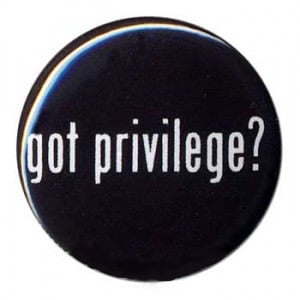


 I am not Troy Davis, and I am NOT Malala. The "I am 'x person who is oppressed'" meme has been growing fast, but seems to have reached a high pitch with the "I am Malala" campaign being promoted by no less than the
The Office of the UN Special Envoy for Global Education.
I am not Troy Davis, and I am NOT Malala. The "I am 'x person who is oppressed'" meme has been growing fast, but seems to have reached a high pitch with the "I am Malala" campaign being promoted by no less than the
The Office of the UN Special Envoy for Global Education.  (*and why this is a truly historic moment for all of us at Nonviolent Peaceforce)
 So when peace agreements and ceasefires are managed or monitored by soldiers, UN
or otherwise, who come complete with guns and tanks and helicopters,
what is the message that sends out to the combatants and to the
civilians who are most affected? Surely the deployment of soldiers, even
for ‘peace’, simply reinforces the age-old assumption that military
might, violence and force is what solves problems, whether the problem
is war or the problem is peace.
So when peace agreements and ceasefires are managed or monitored by soldiers, UN
or otherwise, who come complete with guns and tanks and helicopters,
what is the message that sends out to the combatants and to the
civilians who are most affected? Surely the deployment of soldiers, even
for ‘peace’, simply reinforces the age-old assumption that military
might, violence and force is what solves problems, whether the problem
is war or the problem is peace.  ceasefire in Mindanao. NP teams have been out there every day actually
‘peacekeeping’ in the true sense of that word: addressing concrete
problems on the ground, de-escalating tensions, getting both sides to
back off, preventing displacement and disruption of normal life, helping
people get used to real peace and encouraging them to expect it! This
is the new dynamic at play in this new peace agreement. The people of
Mindanao have already had two years of peace and they will not accept
anything less at this point. They – the ordinary civilians, the people
who bear the brunt of war when it happens – demand peace, and the
belligerents now have to give it to them.
ceasefire in Mindanao. NP teams have been out there every day actually
‘peacekeeping’ in the true sense of that word: addressing concrete
problems on the ground, de-escalating tensions, getting both sides to
back off, preventing displacement and disruption of normal life, helping
people get used to real peace and encouraging them to expect it! This
is the new dynamic at play in this new peace agreement. The people of
Mindanao have already had two years of peace and they will not accept
anything less at this point. They – the ordinary civilians, the people
who bear the brunt of war when it happens – demand peace, and the
belligerents now have to give it to them.
 A human rights group is introducing a new take on CAPTCHAs, those little boxes that make you type in a word to prove you are human before you can comment or register for a site. Their version doesn’t just present a scrambled word to be deciphered, but instead forces a person to choose the right word to unscramble based on the proper emotional response to a human rights violation.
 A human rights group is introducing a new take on CAPTCHAs, those little boxes that make you type in a word to prove you are human before you can comment or register for a site. Their version doesn’t just present a scrambled word to be deciphered, but instead forces a person to choose the right word to unscramble based on the proper emotional response to a human rights violation.