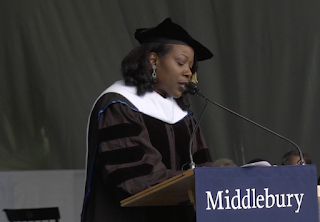
I like the term radical empathy as Isabel Willkerson uses it. She says:
Thinking through solidarity organizing, with an eye to how we can better live the change, as well as how we often slip in to colonial patterns when working together across distance and difference.
Dec 13, 2021
radical empathy
Jul 10, 2021
Decolonial solidarity (new book)
I have not read it yet but there is a new book out that focuses on these decolonial aspects of solidarity organizing. Teodora Todorova's book "Decolonial Solidarity in Palestine-Israel: Settler Colonialism and Resistance from Within" turns to lessons from three Israeli solidarity groups: Zochrot, Anarchists Against the Wall, and the Israeli Committee Against House Demolitions (ICAHD).
Jun 23, 2021
hugs not walls
Sep 18, 2020
Against fostering empathy for solidarity
What Bloom calls cognitive empathy is something different, and he describes it as the ability to understand other people's psychological states without inhabiting them along with them. This is the sense in which nonviolent communication uses the term empathy, to describe a very particular four step process for understanding not just what another person is feeling, but what the met or unmet needs are that are leading to that feeling - not by pretending to be the other person and feel their feelings but through a particular inquiry process. I continue to find the NVC process useful both in my life and in the college classroom for difficult discussions, and I highly recommend the videos at cup of empathy for learning or deepening NVC skills. I think it would be less confusing if NVC used this term cognitive empathy.
But to come back to Bloom, he engages with Elaine Scarry's article "The Difficulty of Imagining Other People" where she argues that imaging the lives of others is not enough motivation to elicit even kindness - and so one imagines much less so solidarity though that term is not used (p. 106). Her skepticism is based on how hard it is to imagine the feelings of a close friend as vividly as your own experience of yourself, and that it is that much harder to do so for large numbers of strangers. Scarry suggests that instead of making other people's lives weigh as much as our own, we should make our own lives less weighty! Bloom agrees, and argues for depersonalization as a tool for wise policy, giving as examples systems for fostering impartiality such as blind reviewing and blind auditions. It's hard to see that as a tool for fostering solidarity, but he also argues for compassion as part of rational decision making, arguing that we can thereby more effectively not just care about but act to foster the thriving and end the suffering of others. Empathy, in the sense of seeing ourselves AS others, he argues, leads to less than rational and less than effective decision making.
Does it also lead to less effective solidarity? In this blog my complaints about that sort of empathy have generally been that it is appropriative, and that it is a patronizing and colonial dynamic to think that I can pretend to BE you, and feel your feelings, and that this is what will inspire me to take action with you. So it was interesting to me to read these other arguments against it by Bloom. Not only does he argue that it leads to less effective action, he says that it is exhausting and is more likely to lead to burnout. Compassion, in the sense of care and concern for another and motivation to improve their well-being, he argues can be sustained for longer (p. 138). I would agree, in my experience it is more sustainable (and realistic and ethical) to feel for than to attempt to fully feel with the other.
May 31, 2020
"I can't breathe"
But what if the chant is done as part of an empathy experiment? Would the chant have a different sort of power if we were all lying face down on the ground chanting it for nine minutes like they did in Colorado? I am generally not a fan of these reenactments of suffering, but I will admit I found this one striking. See the video in the tweet below.
----Incredible scene at Colorado’s Capitol right now. Thousands of protesters are lying face down with their hands behind their backs chanting “I can’t breathe.” They’re doing this for 9 mins. #copolitics #denverprotest #GeorgeFloyd pic.twitter.com/PaABvp8ZoM— Colorado Times Recorder (@COTimesRecorder) May 30, 2020
Since I first posted this, this reenactment tactic has been repeated across the US (and likely around the world). Most notably a huge group did this in front of the White House. I will admit however that I am grateful that at the protests I have been going to we have instead all taken a knee in silence for the 8 minutes and 46 seconds. Not only is this less appropriative, it is more accessible. Many would not be physically able (forget emotionally able) to lie face down with their hands behind their backs and chant.
Dec 29, 2019
my wish for the new year
Oct 28, 2019
withdrawal symptoms empathy experiment
But this video of a particularly difficult empathy experiment (a man trying to experience what it is like to go through withdrawal symptoms) I found disturbing for other reasons. Should we take on hurting ourselves like this? Ask others to hurt us? I understand that he is not asking others to do this, he wanted to dramatize the pain and help others see it. Why is it easier and more compelling to see this pain when he does it than when an actual addict goes through it?
I very much appreciate that you are asked to take concrete action after watching this video. Please do so at https://chooseempathy.me
Jun 26, 2019
What solidarity work do images of the suffering dead do?
In Latin America there is a long tradition of showing, holding, and marching with photos of those killed and disappeared by the state as a way to build strength and solidarity in the struggle for peace and justice. These photos are always of these people when they were alive.But in the last week on Colombian social media circles a video has been circulating of the dead body of Maria del Pilar Hurtado, a social leader that had just been assassinated (one of some 800 that have been murdered since the peace accord implementation process began - most for working to implement the accord in some way). The video is of her 9-year-old son finding her body and becoming distraught - and many of my friends who saw it were so distraught themselves that I actually chose not to watch it. The photo here is of Maria alive.
I didn't have the same option not to see the photo that has been circulating in the US media of the bodies of Oscar and his toddler daughter Valeria, who drowned trying to cross into the US. I will never be able to unsee that horrible image.
Both the video and the photo have sparked outrage and protest. I've read that in Colombia there have been more protests against the wave of murders against social leaders in the past few days than there had been after any of the other deaths. So these extremely disturbing images can spark solidarity - but is this the way we want to do solidarity?
I will admit to having very mixed feelings on this one. I think it is important to see the truth of what is happening, to be outraged, to grieve with Maria's son - but I also value dignity and privacy. I also value my own mental health, and I chose not to watch the video.
Julia Montejo argues that these images are dehumanizing and disrespectful. As she puts it, "compassion shouldn’t hinge on the degradation of marginalized communities." She goes on to say that in a country that circulated photos of lynchings, images like this are unlikely to change peoples minds and instead will simply traumatize many who see them. She argues instead for sharing photos of these people when they were alive (as has long been the tradition in Latin America).
Yet sometimes clear documentation of horrors has been key for sparking solidarity. Black communities have been organizing against police brutality for decades, but it was when people started widely capturing the attacks on video that organizing really took off. And it is also true that I am still haunted by Eric Garner's "I can't breathe." How much do we have to traumatize each other to move ourselves to action?
Jun 10, 2019
Staying in shape is NOT solidarity with refugees
Jun 2, 2019
running with a red hand
It's astounding to me, having recently moved to the US from Canada, how little attention there is to this crisis in the US, when in the US women on reservations can be 10 times more likely to be killed or disappeared. But check out the inspiring activism by Rosalie Fish (in the photo). She has been racing with this red hand on her face, and the letters MMIW down one leg. Each race she runs in honor of a particular indigenous woman who has been killed in Washington state. Since she is a young indigenous woman herself, the red hand is particularly powerful imagery. It seems to me to be saying I have run away from this violence so far, but other women like me haven't been able to.The US needs to stop running from this crisis and face it head on, learning from Canada's example.
Apr 29, 2019
great cfp for a special issue on solidarity
- How are relationships within transnational networks of political solidarity maintained, reshaped and manipulated through cultural and artistic events and forms?
- How do international solidarity campaigns navigate and bridge complex intersubjectivities, such as race, class, gender, sexual orientation, and indigenous and/or post-colonial status?
- How do solidarity movement participants create spaces through cultural and artistic production within which ideas are able to be mapped?
Sep 30, 2018
patriarchal power will not be dismantled by empathy alone
You may have noticed some women black out their profile picture today as a solidarity tactic. Here is a powerful critique of this tactic from Harsha Walia:
"'Female blackout' to protest domestic violence is today. I refuse to turn my profile pic to a black square. I refuse to disappear as part of some bizarre awareness project that furthers the very goals that patriarchy intends - submission and disappearance. Can we please stop with these die-ins, disappearings, becoming faceless trends? They arent only disempowering, they are a strategic mistake. Power, and certainly patriarchal power, will not be dismantled by humanizing empathy alone."
Sep 26, 2018
learning empathy through a video game
Jul 12, 2018
Putting yourself in someone else's shoes doesn't work
But is this why there has been a boom in empathy experiments the last few years? Are we really trying to know the other, or just care about the other? Do empathy experiments work for helping us at least care more about the suffering of the people we're pretending to be? I am also dubious about their effectiveness in this regard.
Do we really need to know what it's like to be lost at sea to care about refugees whose boats are wrecked on the way to Europe? There was such an outpouring of support for the boys stuck in the cave in Thailand, yet I assume it is an experience almost none of us have had or have pretended to have.
I think the issue when there is a lack of caring and solidarity is not that we can't imagine the experience, but that we other the people having it. We distance ourselves from them in some way. So here again what might work better than putting yourself in someone else's shoes is just to ask them about their experience and feelings. Hearing their personal stories can help us connect around our common humanity.
Some ways of sharing stories are more effective at building solidarity than others. More on that later. I just survived my first year teaching on the tenure track and am slowly getting back to writing on this blog.
Jul 10, 2017
solidarity against hate
Homophobia and islamophobia are not actually phobias. I do not believe that they are mental health conditions (like agoraphobia or claustrophobia) and it is wrong to put them in that category when they appear to be based on hate, not fear. As such, I avoid both terms and prefer instead the terms anti-gay (or anti-LGBTI) prejudice and anti-muslim prejudice.It is strange that the words for different sorts of prejudice and hate can sound so different. Racism, sexism, agism, ablism sound similar, but is there a similar -ism version for the two terms in question here? Sherman argues for the term gaycism, but it seems unlikely to catch on. It could be useful for alliance building if all were said using a standard construction that we could put side by side, and I propose here we simply use anti-black, anti-woman, anti-gender queer, anti-Muslim, etc. Whether you then add on the word prejudice, bias, hate, or bigotry could vary.
May 9, 2017
Chances are growing that your research might be weaponized
A few months ago I published the article Beware, your research may be weaponized in the Annals of the American Association of Geographers (AAG), as part of a forum on militarism in geography that came out of and is part of the long standing struggle in the discipline to address the growing use of geography by the US military in particular. (If you are a geographer and have not yes signed this petition, please do! The AAG finally agreed to set up a study group, but we need to keep the pressure on for good recommendations.)I was honoured to have the web site The Conversation approach me and suggest that I do a popular shorter version of this article. This was my first time trying to do a popular version of an article. It was a bit of a shock at first to see how heavily my draft was edited. Here I thought that my writing was generally fairly easy to read, but this site actually uses software that rates readability. It was a good experience and I'm now motivated to always do a popular version of my academic articles.
As well as being shorter this version is much more practical, and proposes hacks for avoiding weaponization. The other challenge they gave me was to make it timely and start with a hook that connected it to breaking news. So I started like this:
Politicians aren’t the only ones being watched. Edward Snowden’s 2013 revelations detailing the US National Security Agency’s widespread surveillance have made clear that, these days, everyone should be thinking about privacy and security.
Read on here ...
Apr 21, 2017
denim day
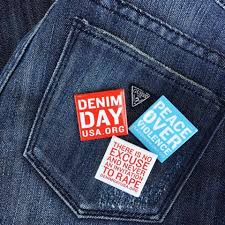
April 26th 2017 is this year's #denimday, where you are asked to wear jeans as a way to speak out against sexual violence. As I have blogged before, one of my various critiques of this campaign is that so many people regularly wear jeans that it would be hard for your jeans to stand out on this day.But I've learned that all cadets and staff at the US military academy West Point have been officially encouraged to wear jeans that day - and in fact the email they got about it explained the history of this solidarity action better than the official site does:
"all of West Point is encouraged to wear jeans to work as a visible means of protest against the misconceptions that surround sexual assault. Denim Day was originally triggered by a ruling by the Italian Supreme Court where a rape conviction was overturned because the justices felt that since the victim was wearing tight jeans she must have helped her rapist remove her jeans, thereby implying consent. The following day, the women in the Italian Parliament came to work wearing jeans in solidarity with the victim. Since then, wearing jeans on Denim Day has become a symbol of protest against erroneous and destructive attitudes about sexual assault."
Well since the military rarely wears jeans, and has a serious sexual assault epidemic, I would be happy to see them all wear jeans on this day. It would be particularly striking if they wore uniforms on top and jeans below!
Jan 23, 2017
solidarity braids
I have blogged here before about various symbolic acts of solidarity, from wearing certain colors, to wearing heels, to going barefoot, to being silent for a day. None have moved me like this beautiful act of art and protest.As Trump was being inaugurated, 50 women organized through the group Boundless across Borders came together on the US-Mexico border pedestrian bridge between El Paso and Ciudad Juárez and braided their hair together.
I love the way this protest literally and symbolically weaves together the bodily intimate as a way of shaping the global. Global politics are always shaping our daily lives, our bodies, our hair. So too what we do with our bodies day to day is constantly shaping global politics, from what food to how we manage childcare. This is a basic argument of feminist political geography (if you want to read more about it, check out the book the Global and the Intimate).
Xochitl Nicholson, one of the organizers, talked about why they used hair this way, “We wanted something that referenced women directly, but that also sends a message about our common heritage and common backgrounds in a broader context,” Nicholson said. “It’s a symbol of collective strength.”
Of course this protest isn't accessible to women who wear head scarves, or women with kinky hair, or short hair, or no hair - but I still love the symbolism and intimacy of it.
Dec 11, 2016
Ways to make safety pin solidarity actually safer
I have posted repeatedly on this blog about people wearing different things to signal solidarity of various sorts. I research how people build alternative securities through solidarity - so I have been following the debates about recent attempts to create safety by wearing safety pins.
If you are in the US, and maybe even Canada, you have probably heard about wearing a safety pin to signal solidarity for safety in the face of a hateful attack. But I will start with a brief explanation for global readers, since I recently presented on it at a workshop in Brussels and no one had heard of it. This was all the more surprising since it was a workshop on 'Nurturing solidarity in diversity' put on by the DieGem research group (see their paper on that page about their work, Putting flesh to the bone).
People started wearing safety pins in the UK after Brexit, in response to a huge rise in anti-immigrant attacks. It was inspired by the by the #illridewithyou movement in Australia, in which people offered to take public transportation with Muslims fearing a backlash after a Muslim gunman held people hostage in a cafe in 2014. I believe the initial idea was to signal something like 'I will step in to create safety' in the case of an anti-immigrant attack.
Safety pins were taken up in the US in response to an alarming rash of hateful attacks of various sorts in the US after the election of Trump, against not just immigrants but Muslims, Jews, Latinos, and LGBT people. - Discussion and practice of a range of active, potentially helpful bystander behaviors as well as the costs and benefits of different behaviors.
- Bystander pledge to increase commitment to intervene.
- “ABC” card – Active Bystanders Care (Assess the situation. Be with others. Care for the victim) includes reminders of the decision-making process for intervening, lists several examples of ways to intervene and provides contact information for relevant resources.
1) Address recognizing a harassment situation, including hate crimes
3) Teach different strategies for intervening in harassment situations
4) Outline how to choose the appropriate strategy while prioritizing safety of self and others
The main role the safety pin may actually serve might be to regularly remind the wearer of their commitment - and hopefully inspire them to think about how they might respond, to take a training, and to be on the lookout for even microaggressions.
It makes a real difference if the person wearing a safety pin frames it as 'you are a victim, I am not - I am here to help you', or something like, 'I believe in safety and human rights for everyone. I am part of the new civil rights movement and in the struggle to ensure that everyone’s rights are respected. When I am a bit safer than someone else under attack, because of a particular privilege, I will leverage that privilege to try to increase their safety.'Whenever privilege is used in solidarity organizing across difference there is a danger of reinforcing the systems and practices that make some lives worth more than others, but when used carefully and with awareness, sometimes privilege can be used to wear away those inequalities.
Much as with the international protective accompaniment that I research, a quick and easy use of safety pins could reinforce the superiority of some over others. It takes doing more consciousness raising and organizing - but if safety pins are used as part of a larger project of education and movement building they could play a role in changing the reality that now some people are safer than others.